
Labor Pains

In the summer of 1976, Afternoon Delight topped the charts, and Roots was breaking ground on the bestseller list. I was 10, sporting a new Dorothy Hammel haircut and red, white, and blue bell bottoms. My brother and I said things like “10-4 Rubber Ducky” into our walkie-talkies and watched out for Smokey Bears on our drive up to the camp. Watergate and the Vietnam War were over, and the country was between oil crises. It was a good summer for a birthday bash.
On the eve of our 250th, I see our country’s birth through a different lens. I’m 60 now, and have actually given birth, three times. I know the pains of labor that come before the joyous photo of the exhausted mother holding her precious newborn, and I remember the years of hard work that follow. Such parental challenges and celebrations are on my mind this 2nd of July, 2026.
In June 1776, Thomas Jefferson joined four fellow founders to draft a Declaration to King George. He spent weeks writing in a stuffy upper room of a bricklayer’s house, reluctantly accepting minor edits from his colleagues. They also argued over the not-so-minor ones, some of which remain a source of tension today. Jefferson fought to keep his original “sacred and undeniable” truths, but eventually agreed to Benjamin Franklin’s “self-evident” ones.
Meanwhile, delegates from up and down the eastern seaboard were making their way to Philadelphia to debate the future of the colonies. Those men could not have imagined what it would mean to declare, create, and then live in a democracy. They were as clueless as expectant parents trying to picture arguments with angsty teens or the heartbreak of a child leaving home.
On July 2, Jefferson and co. voted to “approve independence” at the Continental Congress. They were quite pleased with themselves for their grand accomplishment. John Adams called it “the most memorable Epocha in the History of America.” Within hours, they would face what all writers find. Coming up with the story is the easy part. The real labor is in figuring out the exact words to tell it.
Over the next 48 hours, the men gathered in their woolen clothes and wigs, behind closed doors and windows, in the sweltering Philadelphia summer to collectively line edit Jefferson’s proposed declaration. Some wanted to disavow British connection entirely; others wanted to preserve an opportunity for future reconciliation. Ultimately, they settled on the phrase, “enemies in war, in peace friends.”
Each edit hurt Jefferson, who sulked in the corner while his words were debated, changed, and omitted. No place was Jefferson’s frustration more evident than when Congress bastardized his remarks on slavery. He was livid when they cut his condemnation of England’s role in “execrable commerce.” (Rich language for a man who grew wealthy in the slave trade.) After two days of cuts, complaints, and compromises, they voted to adopt The Declaration of Independence as we know it on July 4, 1776.
Even with such an historical birth, their work was just beginning. 11 years later, the same men who birthed a nation had to figure out how to raise an adolescent country. They met again in Philadelphia, took up their quills, and went through the same grueling process of writing and rewriting, standing firm and sacrificing. (Writers call this “killing your darlings.” Parents call it “choosing your battles.”) With the ratification of the Constitution in 1788, and the Bill of Rights in 1791, these patriarchs created an enduring system that would recognize mistakes, keep its powers in check, and adapt to evolving sensibilities. They had done their part to form a more perfect union.
Such a nuanced story of dreams, missteps, failures, and accomplishments would have been lost on my 10-year-old self. In 1976, it was enough to watch a parade from my grandmother’s porch, roast marshmallows over a bonfire at the camp, and use sparklers to write my name in the night’s sky. In 2026, I cannot ignore the contradictions inherent in the birth of our nation. But I will celebrate the great experiment with the eyes of a mother. Our country is still young, and I remain optimistic about the next 50 years. As a patriot and a parent, I don’t need perfect to be proud.
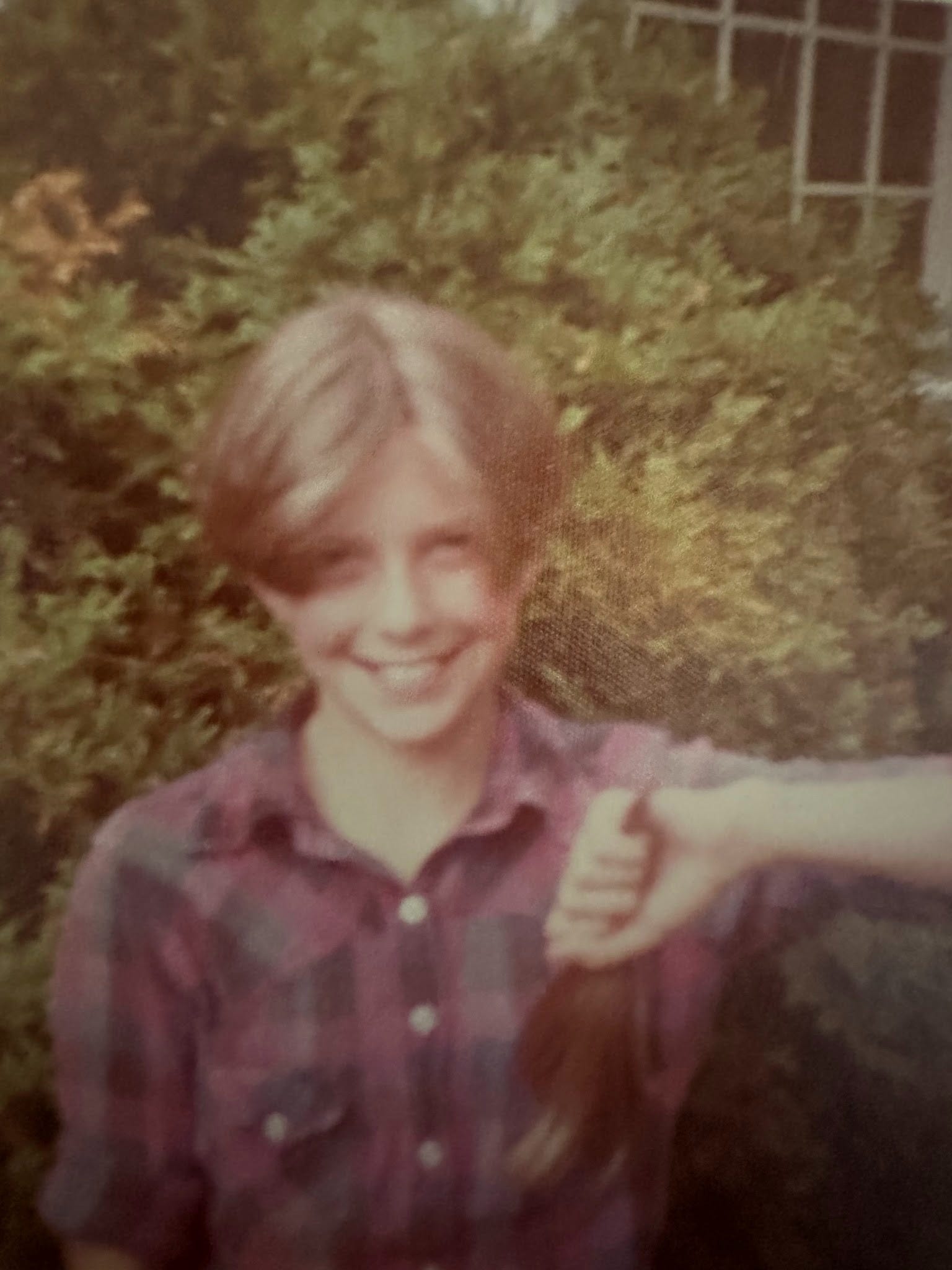
June 1976. No more ponytail.
Old friends, half of whom are writers, are joining us for the annual July 4 Westchester parade followed by a BBQ in our backyard (taking into account various dietary requirements/preferences). When we gather, we often have a reading appropriate to the occasion. I will share your essay with them.
Inspiring, informative & a “labor” of creativity.
Gave birth to my youngest daughter in 1976, 200th year!🇺🇸